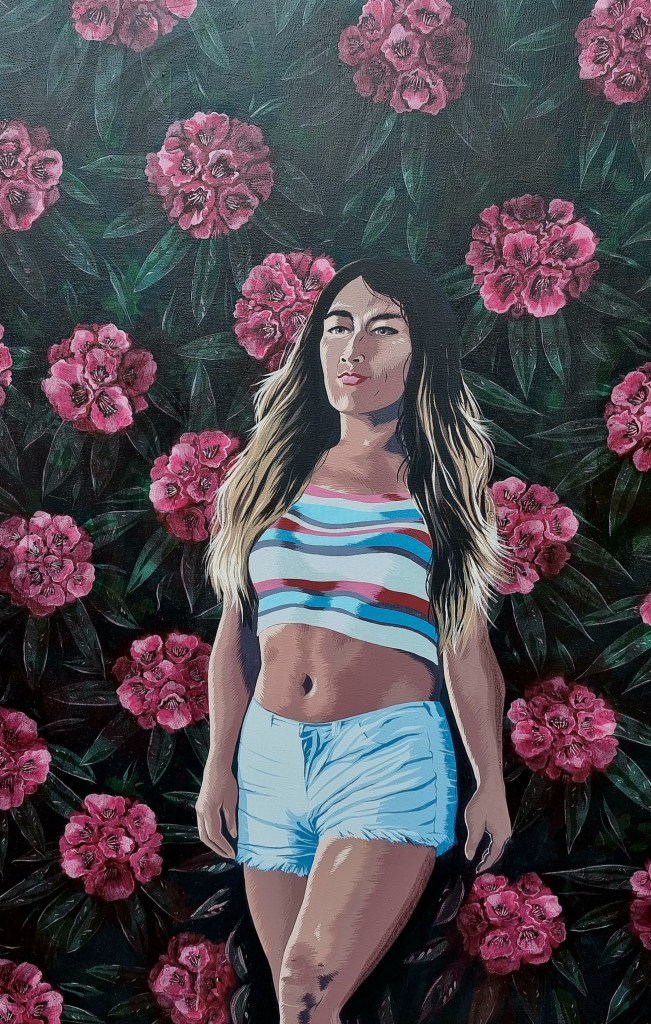
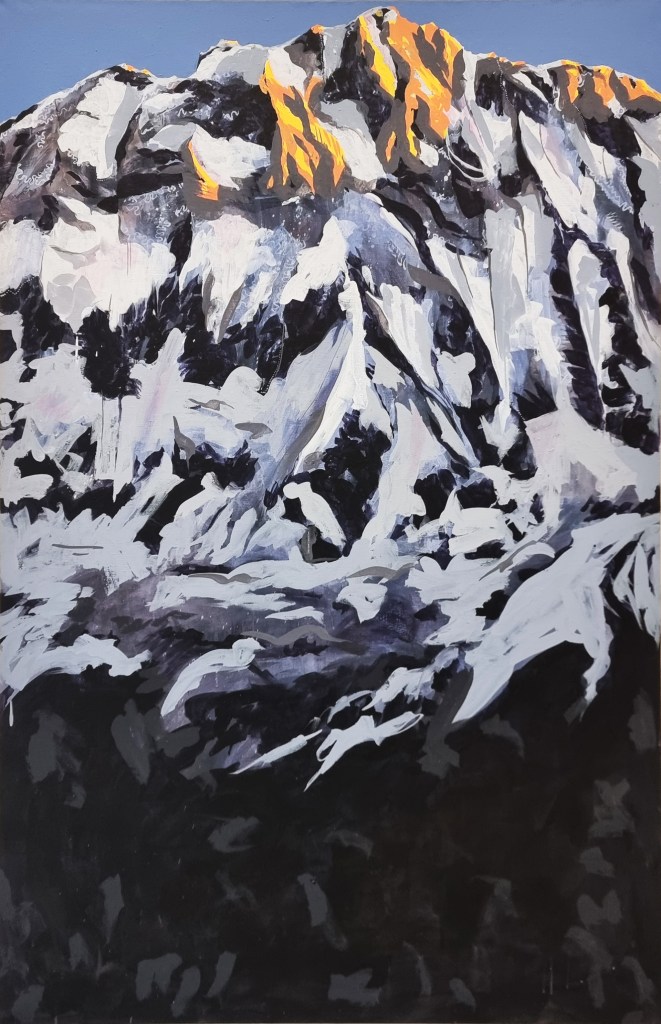
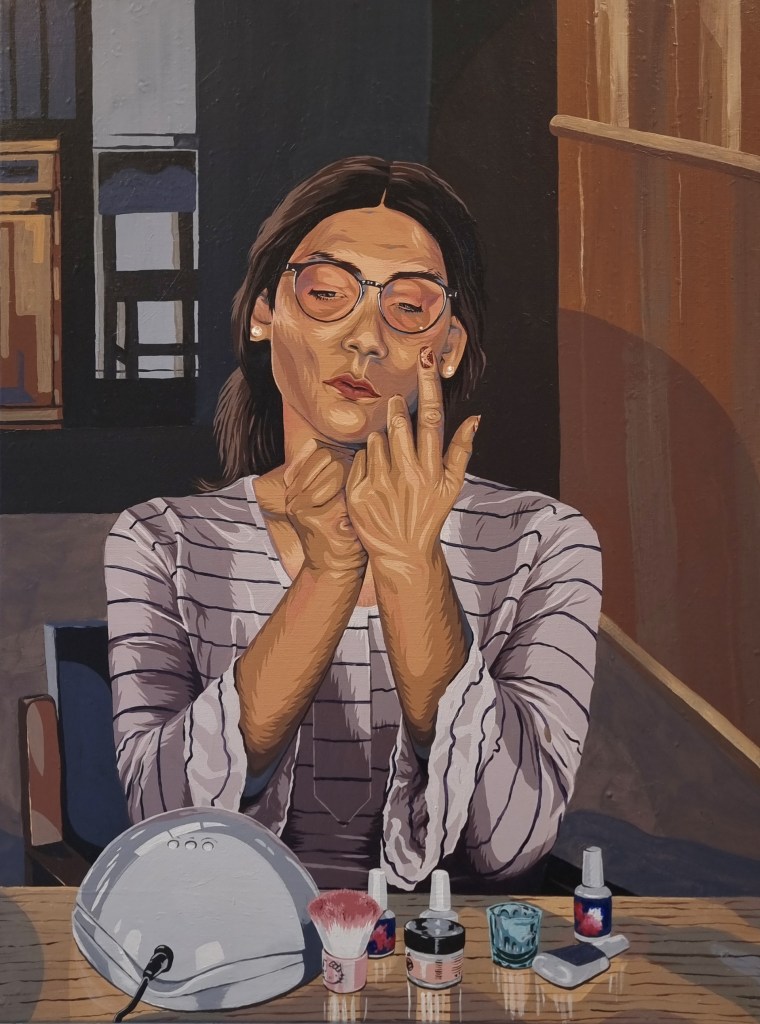
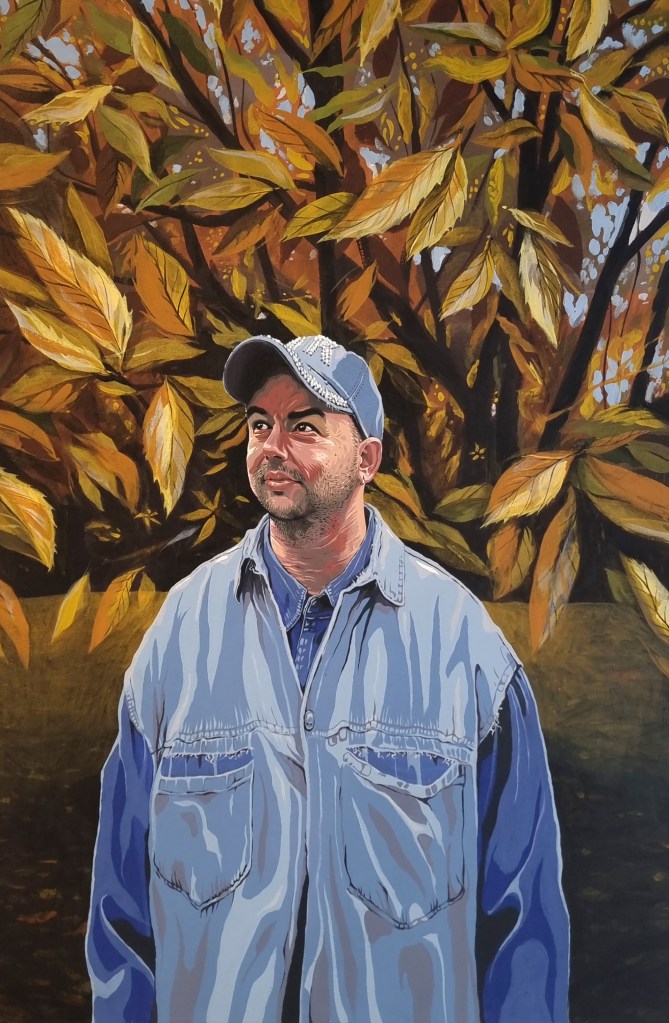
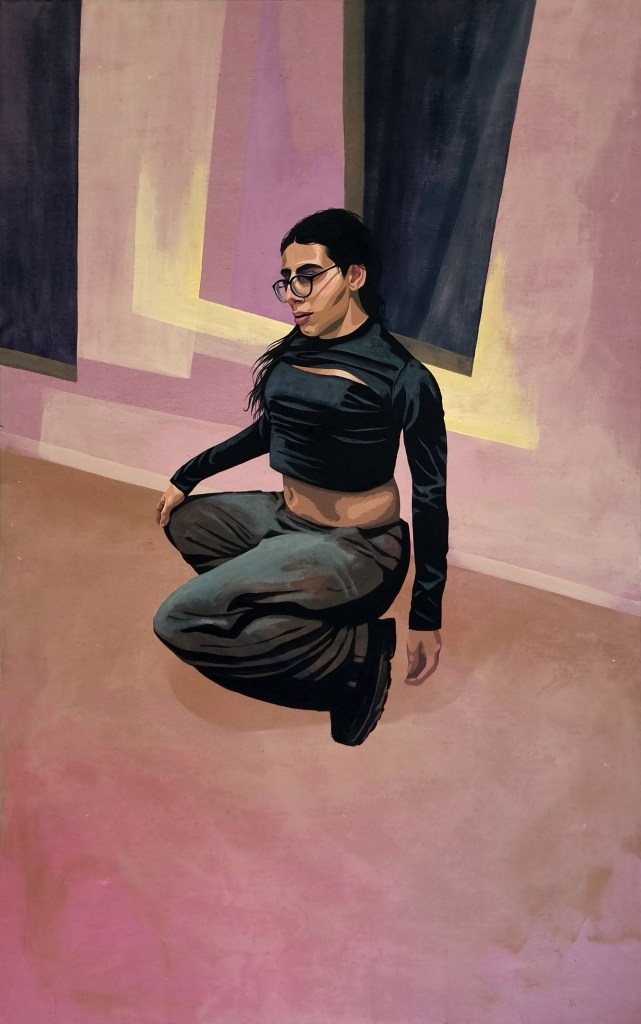
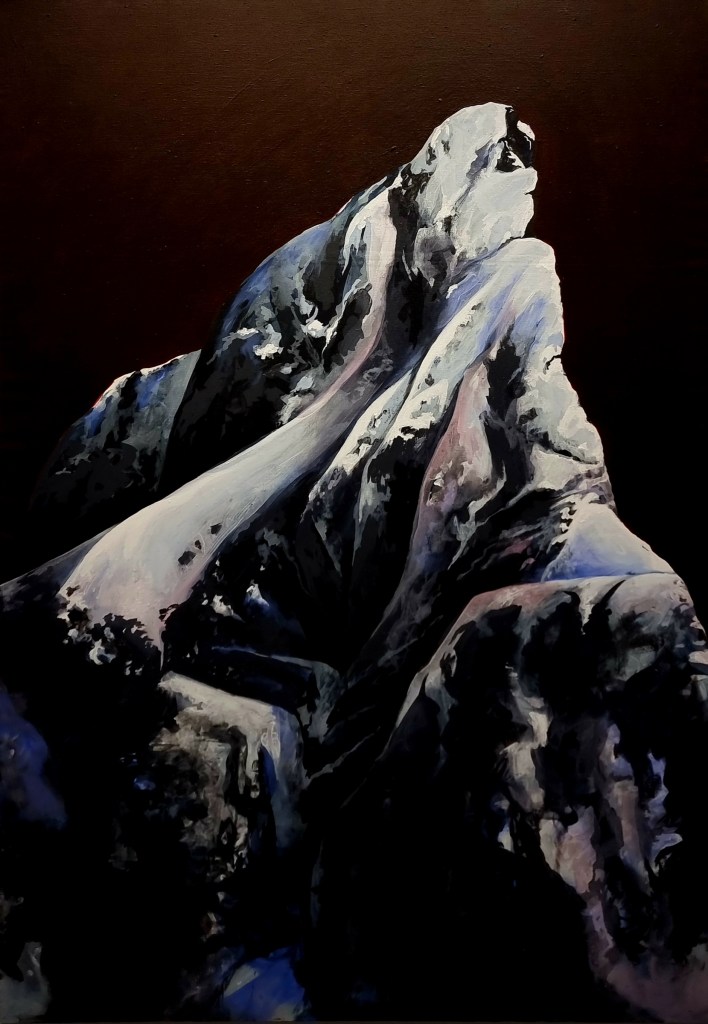
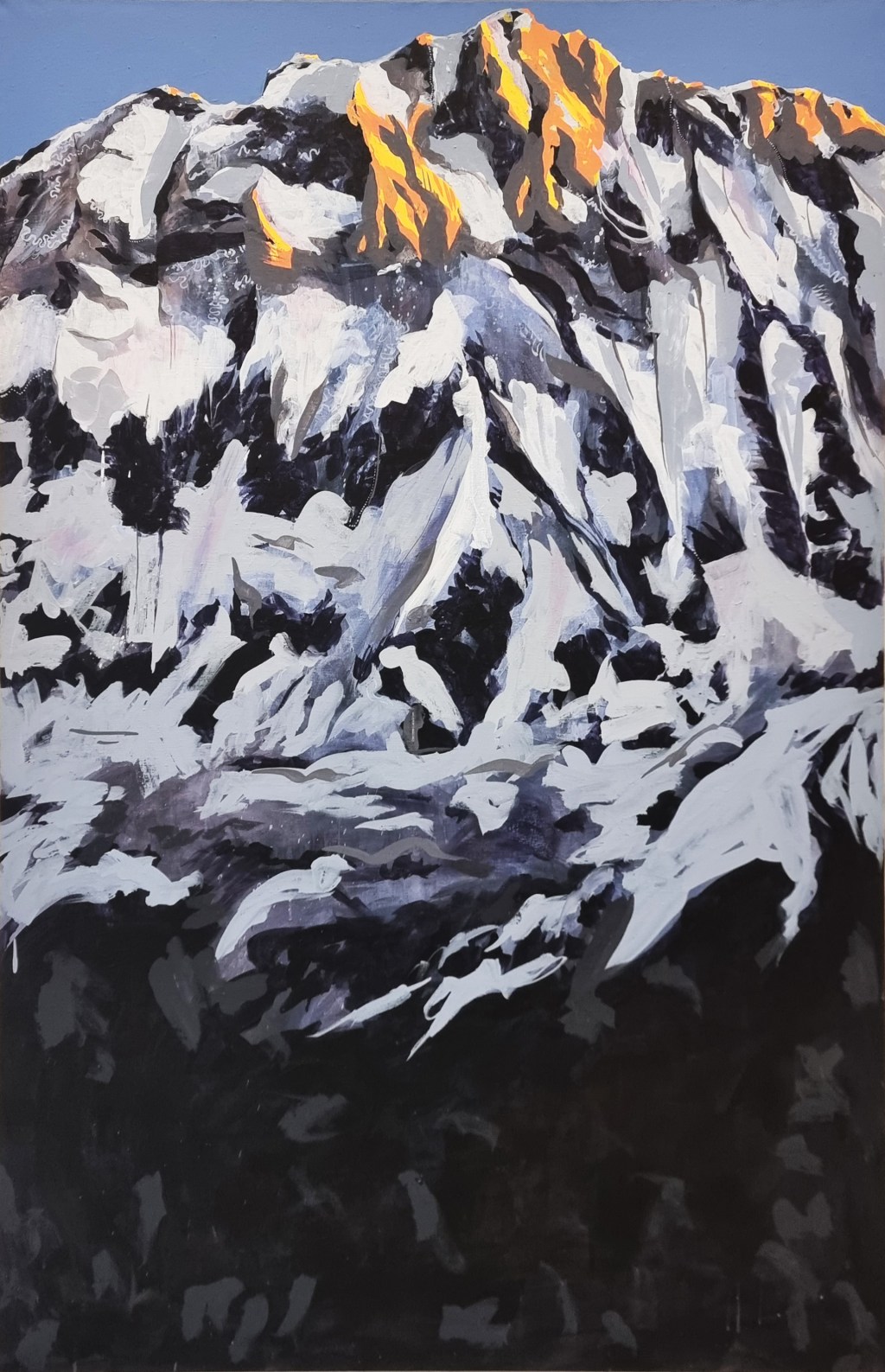
Acrylic paint on canvas
While the gender norms in Judaism, Christianity and Islam are quite strict, it is different in Hinduism and Norse mythology. In Hindu texts such as the Mahabharata, written between the third and fourth centuries BCE, and in Snorre’s Edda, written around the year 1220, one can read about gods and anti-gods who change both gender and form, who are
male, female, both, or neither, and where this is portrayed as a superpower.
In Nepal, I have transgender people through the Blue Diamond Society (BDS), Nepal’s leading Igbtqi+ organization. I was allowed to take pictures for artistic purposes. In the Nordics, I have made contact with Scandinavian trans people who agreed to be part of my art project. I painted portraits. I also wanted to portray the mythologies, by painting
the mountain Annapurna 1, from the Annapurna mountain range (in Hinduism, Annapurna is the god of food and sustenance) and the mountain Smørstabbtind from Jotunheimen (“home of the jots”, the jots
are anti-gods in Norse mythology). There is something divine and majestic about these mountains, which again makes me think of the last verse of Hans Børli’s poem Under the Sky: “I have recognized the greatness of being so infinitely small.”
*From the poem “Under the sky” by Hans Børli.
 Mina Stokke